Hoarding
gathering impulses

Note: I need to be better at sending these when they emerge! This was drafted weeks ago and I have more to write about for a later letter.
Dear reader,
I am so tired. I’m tired in the way that January in the mid-states demands of my animal body. I’ve been waking up late into the morning and trying to take it easy for the remaining break. My fervor of making has slowed and sometimes I am content just to sit. If these could be the conditions of the rest of my winter, I would be satisfied to nest, make quilts from the pieces I’ve gathered, and plan for the spring garden. Unfortunately the demands of work and bills and soon school will ruin this peaceful bubble. It’s obvious that our seasonally blind approach to work in this world does not promote a sense of actual wellbeing.
I have about three months to write and defend my thesis. So far I have a roughed out five page introduction and very little feedback. My new year’s eve tarot card pull for 2025, the chariot, indicates that this is a path I will have to walk alone. Common sense against my hopes for a better program also indicates this.
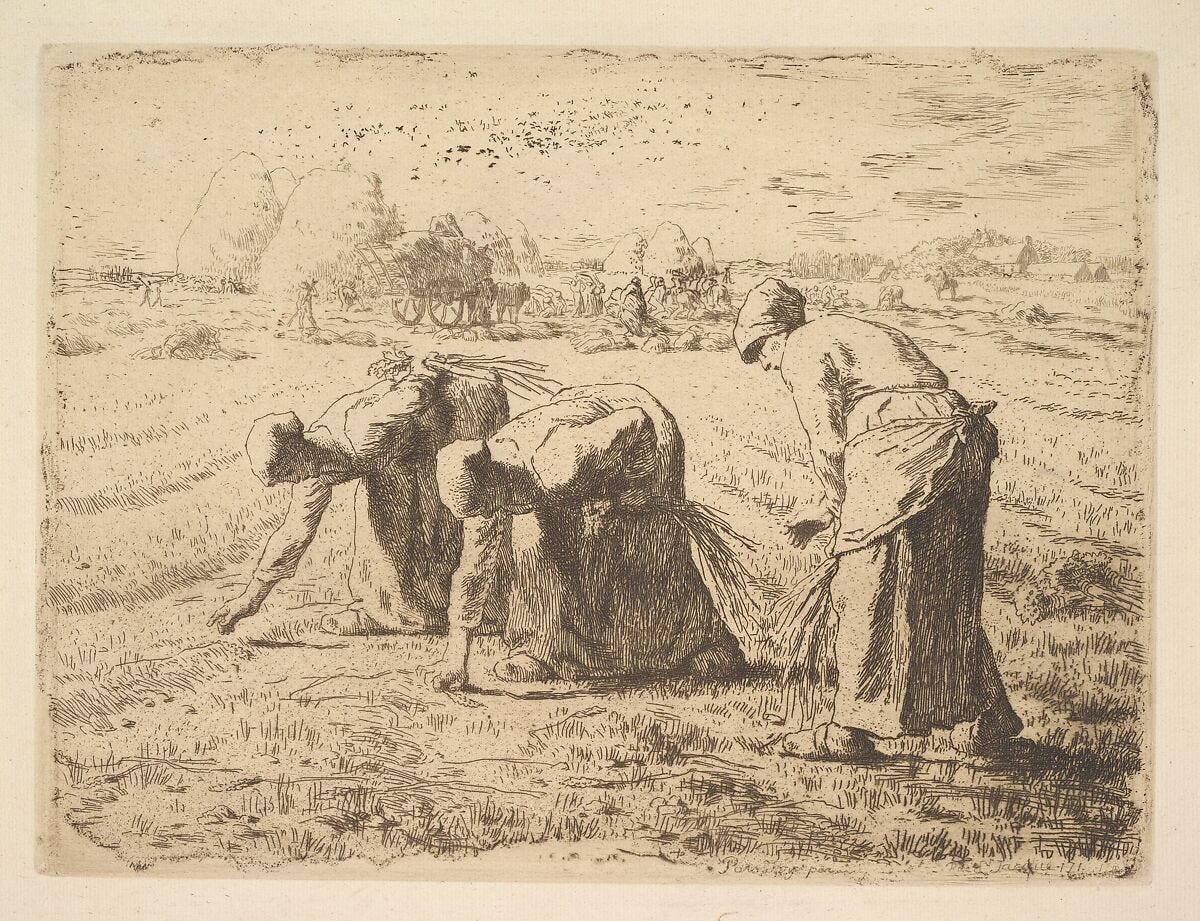
I’ve been watching Hoarders which originally aired in 2009. It’s a weird window into an aspect of gleaning and the ways that resource gathering in a nation that is highly individualistic can morph into these hazardous conditions. Hoarding is a severe symptom of scarcity culture. Often, people on the show speak of times in their lives when they didn't have what they needed, extend periods of time when they were hungry and stretched thin. While gleaning is a gathering of useful materials and implies the use of those materials, hoarding is an excess of materials to have rather than to use.
Working class hoarding and hoarding in poverty is also deeply pathologized unlike the gross wealth hoarding of America’s elite. Hoarders and shows like it also are a very thin safety net wherein exposure to the world for content allows people to access brief therapy and financial resources to clear out their houses in time to avoid eviction and other consequences of a razor thin living in America. Our media landscape has latched onto human suffering and poverty for views.
In a less severe and more specific example, fiber craft material is known to be gathered in stashes of potential energy. Certainly I have a stash of materials, some that I have coveted and moved around with for years. The founder of Swanson’s Fabrics in Massachusetts writes:
Textile and Fiber artists are the most generous people I have ever met, and yet they hoard resources like no other community. Every sewer sheepishly says (while their family rolls their eyes), “Well, I SAY I’m going use it all, but I never seem to do it!”
What we CAN do is be sure to pass those supplies on to the next person who could use them - use them to learn, use them to make something precious and incredible, or use them to decorate their own shelf for a decade, too, before handing them on again. I want to facilitate this passing-down of sewing and fiber-craft wisdom and resources. It has only been a short while that this natural cycle has been interrupted in America, and I think it never really went away.
There is a particular cheeky shame in fiber hoarding. The shame comes from the way craft is so individualized and atomized into an isolated pseudo domestic sphere. Surely there are craft groups, some of which meet in neutral places, but many of which are hosted in stores that sell new fabrics. Our gathering places are dictated by commerce and our access to public goods and places are mostly filtered through transactional relationships.
I also believe that as much as our culture has rewarded individual successes in hoarding, deep down there is an understanding that materials are meant to be shared and used in community. I also think that the hard thing about letting go is the fear of not having what you need when you need it. This has been true for me and it is an ongoing process of release and circulation. Thankfully, I have access to the Community Makerspace which has a similar craft thrift store model to Swanson’s. Materials are usually and reliably available when needed. They are held in common by way of commerce.
Thrift stores are one of the few ways that gleaned material is recirculated (well I suppose Facebook Marketplace too) through this culture which demands new blood, new plastics, new new new. I am content to live in a region of this strange country that is further removed from this shiny consumerism. Old appalachian values prioritize self reliance, a result of centuries of exploitation no doubt. Still there is something wild about these hills, the first frontier for settlers that has remained closer to the land. As the first line of my working draft reads, “We were once people of the land and we can become them again.”
Take care this slow season,