
residency reflections
summer simmers to a close

Dear readers,
What difficult and beautiful days we live in. I have just awoken from a 6 month deadened state, the natural fallout of a master’s thesis process, big move, and working a dead end office job that was both consumed by stress and ennui in the down times. My life felt so closed and I, asleep moving through it, hardly able to lift my head for a moment in recognition of the season, the sky, the wind.
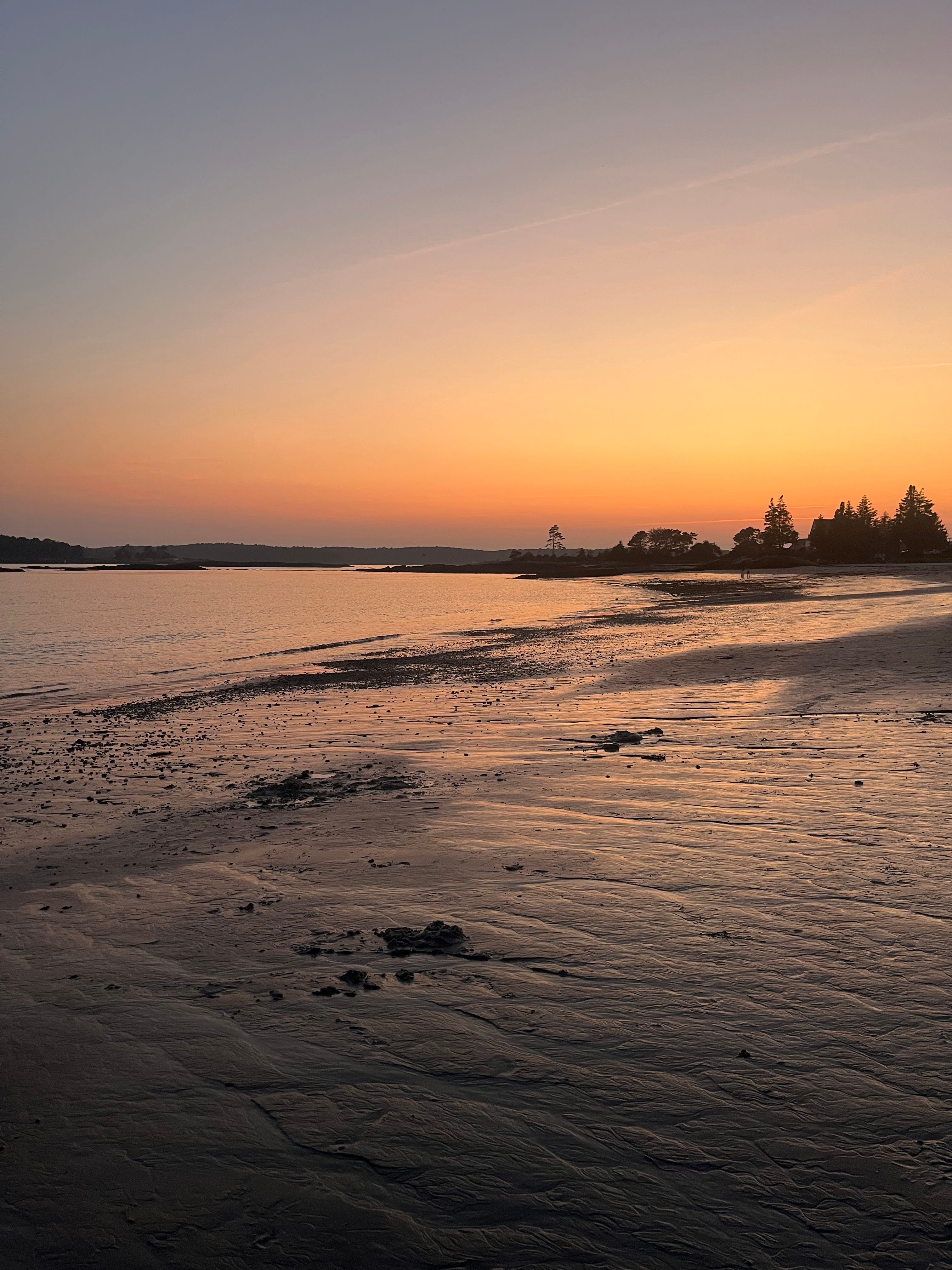
Summer is a brutal time. While through our school days we have come to hope for summer as a social and free time, the increasingly brutal heat, corn sweat, and worsening water quality have come to redefine the once hopeful, languid days. This summer felt quite akin to my summer 2021, immediately post undergrad, lost and spinning out in a yet still terrible economy. I spent my days in a clay studio in Columbus, eating very little and rarely going outside, crashing into my twin bed in an artist squat at the end of the day, throughly crashing out. By the cicada season, I realized that though the warehouse doors were open, it was not enough to have spent my days working partially outside. I craved quiet exterior to the city and accompanied my friend on a trip to Kansas, part of his effort to visit every state.
There is nothing quite like wandering, time away from home, to awaken the soul. I was so lucky to spend two weeks in Maine at Watershed Ceramics as part of a group of artist residents. Prior to arriving, I was able to make several stops. I visited my friends Jason and Elizabeth who were on the precipice of a huge change, both moving and beginning grad school in Virginia. We shared a brief evening together and a delicious summer meal before I received a side quest—to deliver a precious curly cherry credenza Jason made to its new home in Connecticut.
The more I engage in the craft, residency, and folk school circuit, the more people I know all over the country. These are deep and making-based friendships, instilling a confidence that all over this land, people are thinking through their bioregional and making relationships, and that I am just one node in a web, as I have always been. Even better, any long trip can be truncated when I drop briefly into a place-based relationship cultivated by someone I know. In the case of my friends in PA, I got to see many homesteading communities and a model (25 year farm lease) for non-kinship based inheritance, ensuring that the next generation of farmers has access to land and don’t have to start from scratch. These things are possible.
At Elizabeth’s recommendation, I listened to Sheila Heti’s Motherhood on my route. I brought 200 lbs of clay with me but did not necessarily have a plan for its use. In all things I prefer to let the material guide me. Matt Wedel kindly gifted me sculpture clay mixed with local clay, and terracotta which I haven’t used since my failed high school ceramic days. The project crystalized through a question throughout Heti’s book, which is filled with indecision and the deep interrogation of motherhood, especially as an artist. One of her questions, is if she wants to brine a baby. Another is if it is possible to be both a great parent and a great artist.
I have also been struggling with this deep indecision in ways I cannot easily articulate, especially yet, especially here. It is part of a deeply personal process and while I have so much time (Heti’s narrator has 12 years on me), it is still one that weighs greatly. The project emerged through the line about brine, conjuring the ocean which is the eternal mother (or in pagan tradition, grandmother). All life emerged from the ocean. The vessel, formed from 40 pounds of terracotta, became an womb to consider these questions in a locus external to my own body. The dialogue with myself became safe and calm, rather than the deep bodily anxiety I usually experience.
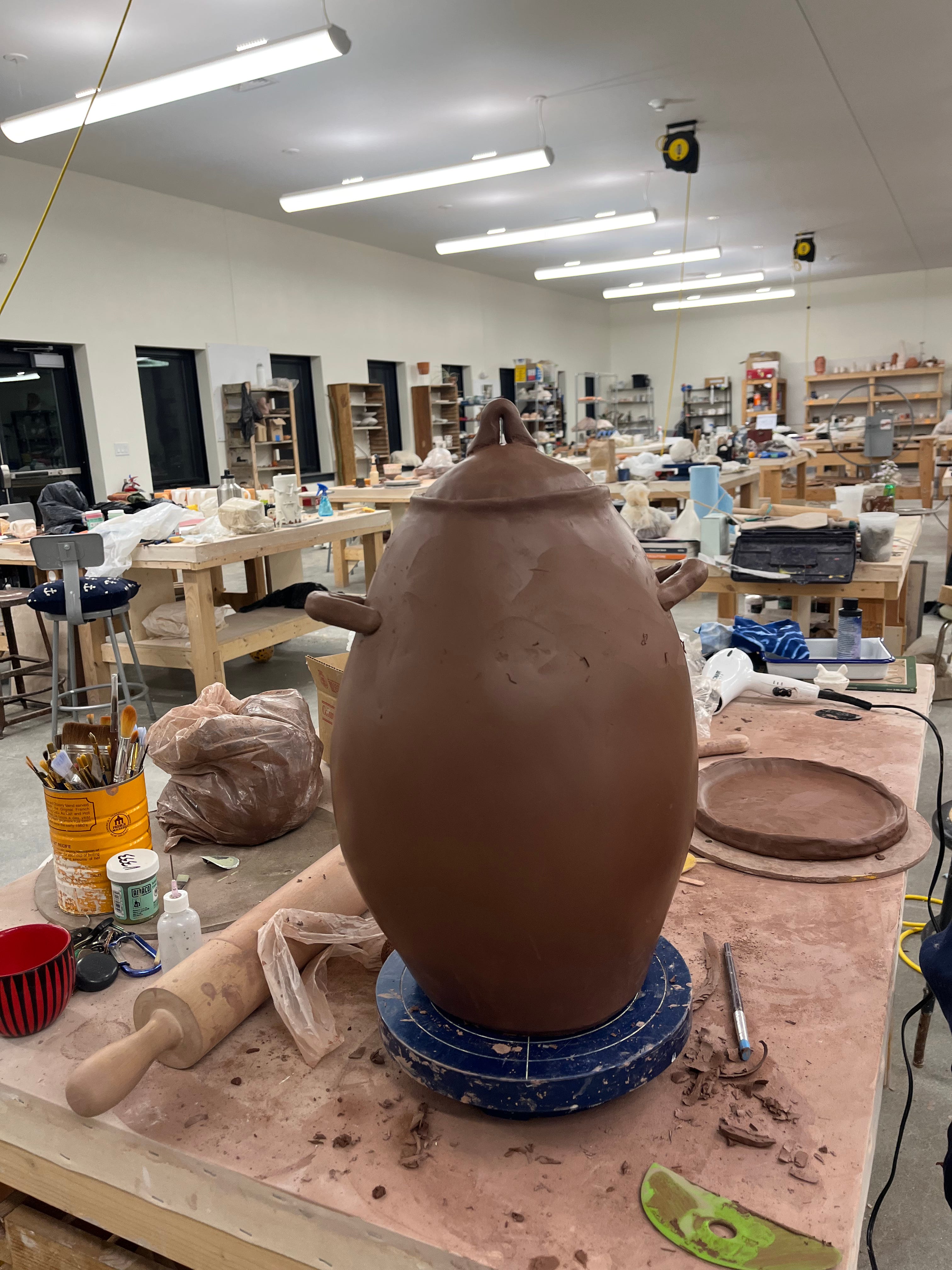
While it is true that I work in very meticulous modes, I would not describe myself generally as a patient person. I intuitively medium-hop working in a series of flow states. Often as my interest in something wanes, I will change modes and resolve to return to the task later. Yes, I have ADHD. I usually throw and trim my little vessels in a day, never having to cover them or return to them once they are ready to be fired. Rarely do I work big or over multiple days. This was a huge learning curve.
On my first night at Watershed, eager to jump in, I built the vessel fast. Each time it slumped over, too wet to hold its own weight and blobbing into the wrong shape. The third time took 5 days and more patience than I thought I had. It was an exercise in extreme perseverance, the more I wanted to abandon the project all together, the more I knew I could not. I finally handled the vessel on Lionsgate, the full moon, a powerful deadline indeed.
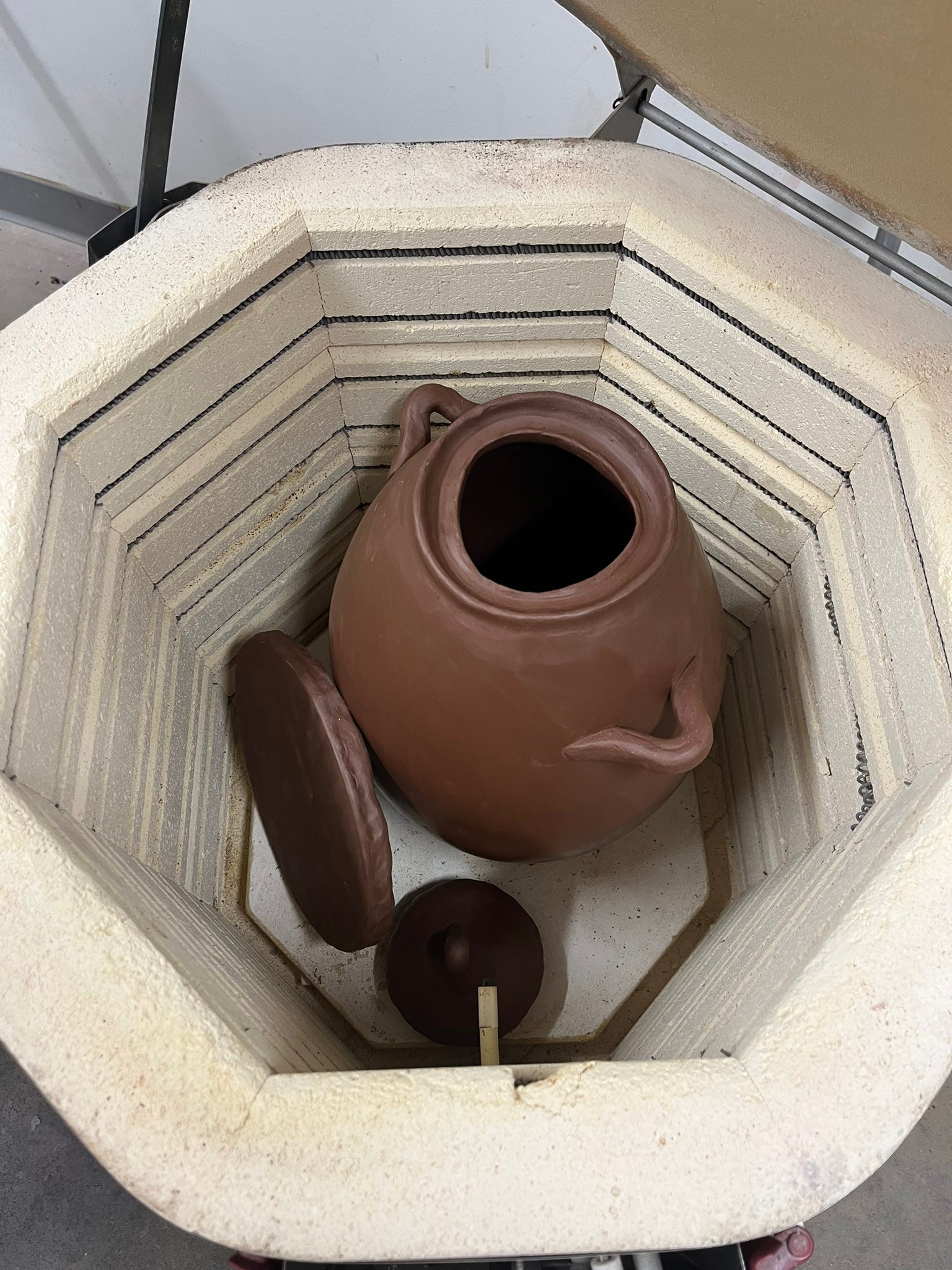
The next part of my contemplation was the firing, chaotic and unknowable, filled with mystery and fear. Apt was the process of release after my patience in the studio. I was terrified I would open the kiln only to find rubble, especially firing from wet greenware straight to a vitrified temp, a cool 2080 degrees. Thankfully Hannah, one of the organizers, hooked me up with a candling program that ferried the vessel into rock form safely.
Meanwhile, I spent my days taking walks with new friends, swimming in the ocean, digging marine clay, doing the dishes (my penance as a work study), and wrestling with god. I am a recovering know-it-al and I am trying to meet the world with acceptance, grounded in love. Some might read god with a wrinkled brow but I mean only to speak to the infinite and unknowable ways of the world we inhabit, and the worlds beyond. I don’t believe in a particular god of sorts but rather the presence of life force, from the soil to the sea to the sky. I also don’t believe in a god as one entity who is watching me in judgement. It is just an anchor to the way my ideas are merely caught by me as they float through a creation space. Many artists feel this way, I have come to understand.
Many of the residents are thinking through similar forms of life, emerging, all queer, all interesting, all my age. The space felt like an alchemical gathering of ideas and exchange. It is hard to put into words, only pure gratitude. What does it mean to be an artist in a country that hates intellectualism, creativity, nonconformity, and life? How can we survive as the margins we inhabit are squeezed and squeezed by a technofascist oligarchy?
We come to no conclusions. I came to no answer to my specific quandary either. And yet the process can be the prayer. When we come to a situation with no apparent action, we bow in surrender, recommitting ourselves to refusal and care in the face of immense and multifaceted grief. I am currently revisiting How to Do Nothing by Jenny Odell which feels, as always relevant.
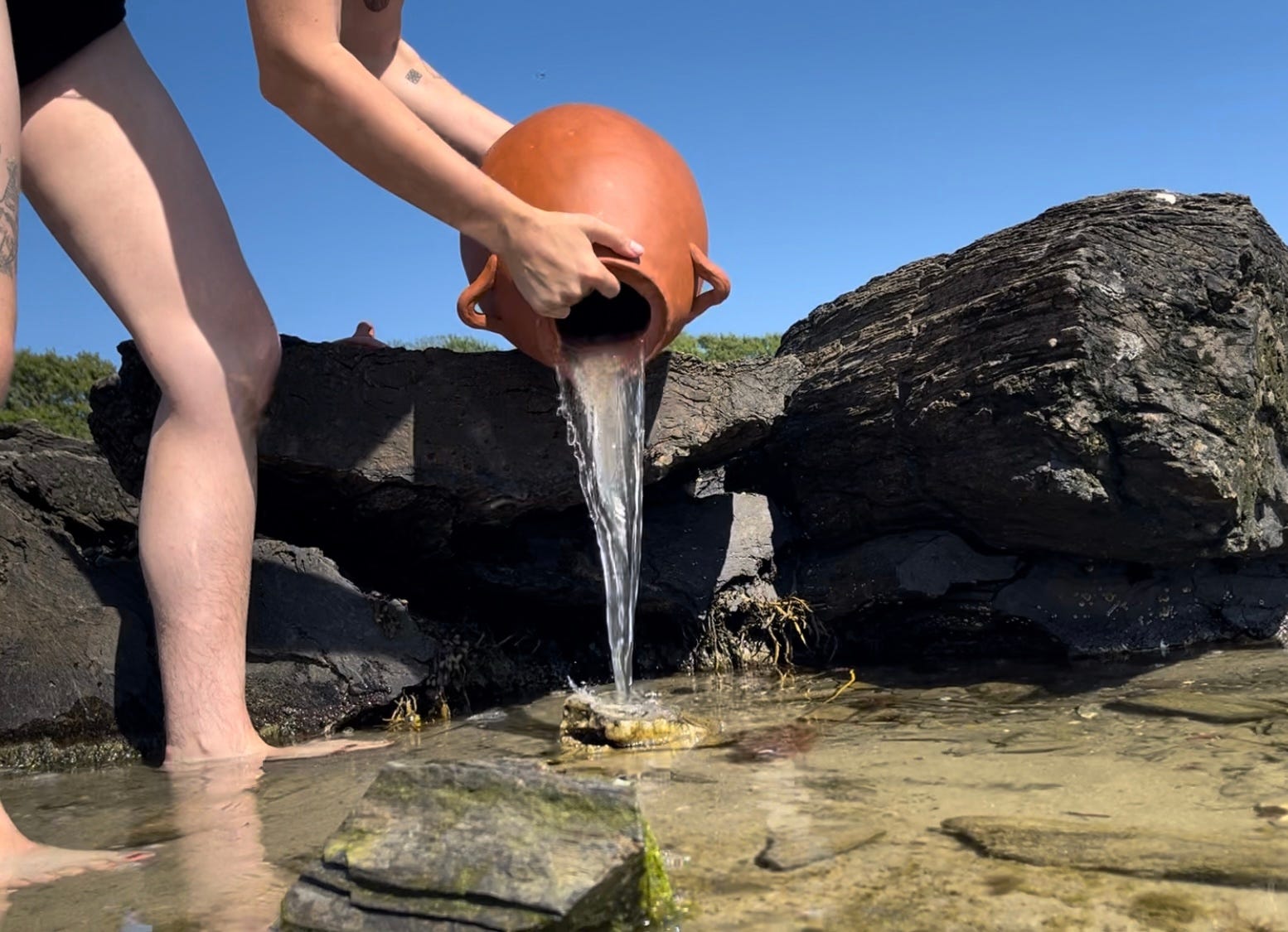
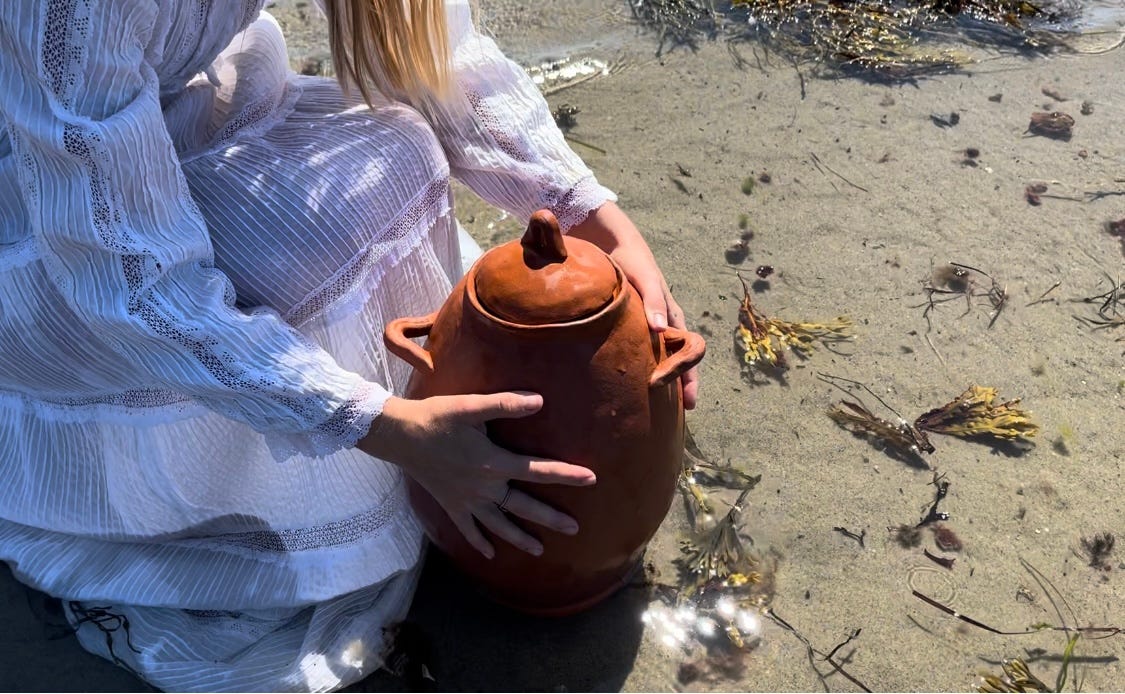
My final piece of the work with the vessel is time based. I allowed myself a two hour performance with the vessel, myself, and the ocean before I filled it with brine and sealed the lid on with beeswax. Over time, I will see how the vessel holds up and if the water will evaporate or stay sealed for as long of a forever as I can imagine.
I experience summer, especially in its end like the plants, my neighbors, do. The golden rod and ironweed are desparate in their output to produce the seeds of next year. They give their all in beautiful flashes of color that are their final push before dormancy and death, the conclusion of the season announced in technicolor. It is also true that the language of the yearly die back is a dramatized version of the going back to school feeling, which even know I cannot escape. Instead of my brief stint as a graphic designer, I am teaching two classes in a town on the Ohio river. And as any Athenian can feel, the vibes of our sleepy summer town have shifted yet again for our population boom of students, like locusts descending on the town.
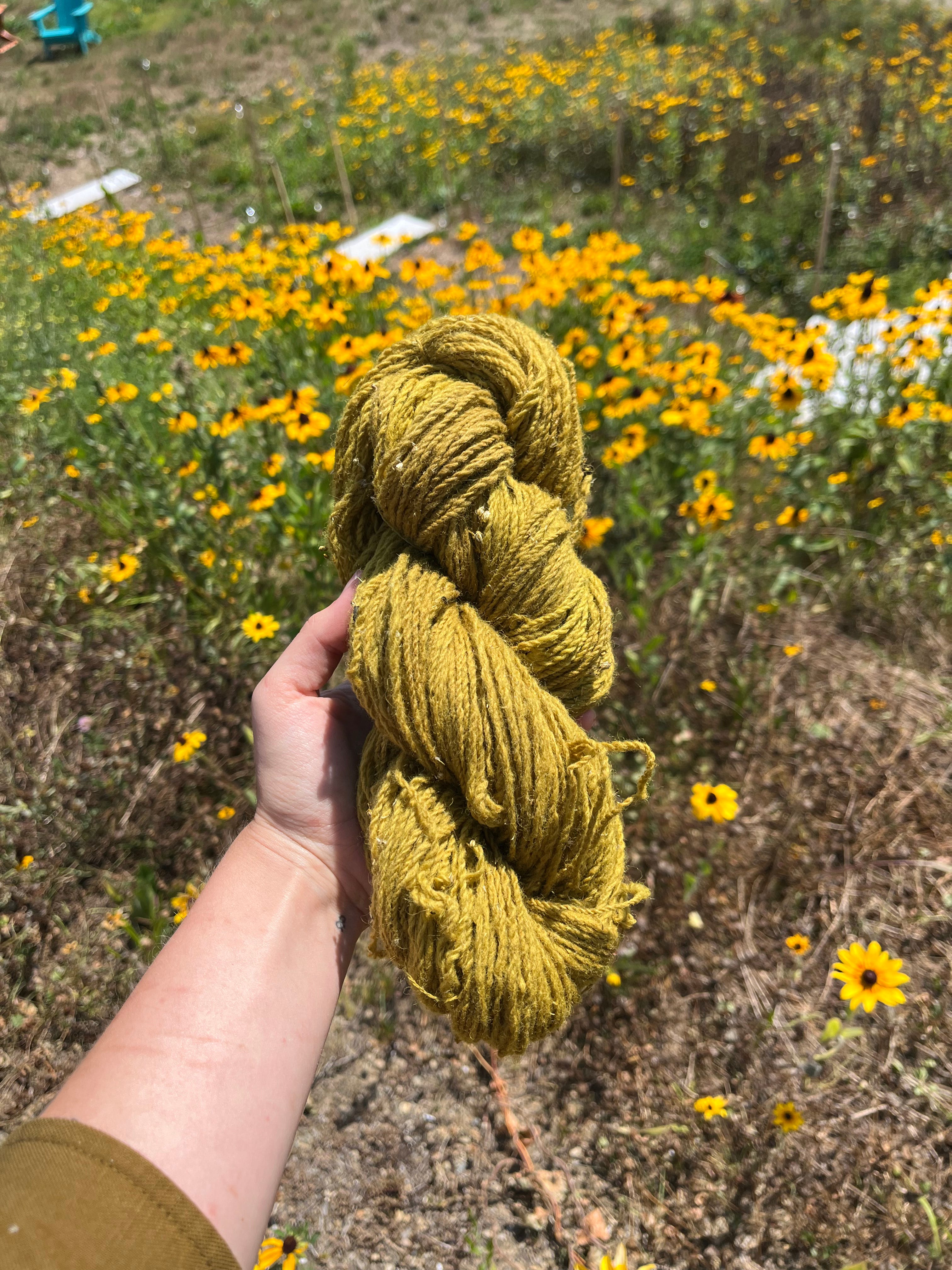
As the goldenrod tells us, nothing gold can stay. If townie summer were yearlong, it would not feel so special.
This is a rough draft and I am releasing myself from the need for perfect outputs. I hope it will still land somewhere in your hearts.
In summer’s end,